Understanding Anger: The Emotion We’re Taught to Fear
Anger is one of the most common yet most misunderstood emotions that clients bring into the therapy room. People often arrive feeling ashamed of their anger, frightened by it, or convinced it means something is wrong with them. Others barely recognise their anger at all, because they’ve learned to push it down, minimise it or turn it inward. In truth, anger is neither destructive nor dangerous in itself. It is a natural human emotion – a message, a signal, and often a form of inner protection. At its core, anger is an emotional response to something that feels unfair, painful, threatening or overwhelming. It shows up when boundaries are crossed, when needs are unmet or when a deeper vulnerability is touched. Although people tend to associate anger with aggression, – raised voices, tension or conflict, anger has many quieter forms. It can sit beneath irritability, withdrawal, numbness, tension in the body, or a sense of being “on edge.” For some, it emerges as people-pleasing or self-criticism, because they have learned that directing anger towards others was unsafe, but directing it towards themselves was tolerated.
What often surprises clients is that anger rarely stands alone. Beneath the surface, it is frequently layered with emotions that feel harder to express: hurt, sadness, disappointment, fear, shame or loneliness. Anger becomes a kind of armour, easier to access than these more vulnerable states. Counselling offers the space to explore these layers without judgment. When we are able to soften the reaction and look underneath with curiosity, we often find a clearer picture of what the anger is protecting.
Many people struggle with anger because of the messages they absorbed growing up throughout childhood. Some were taught that expressing strong emotion was disrespectful, unsafe or simply “too much.” Others learned that their needs did not matter, and so anger became something to silence rather than understand. Over time, this shapes how a person responds to conflict, stress and emotional discomfort. When anger has been suppressed for years, it can either erupt unexpectedly or disappear entirely, creating confusion in relationships and within ourselves.
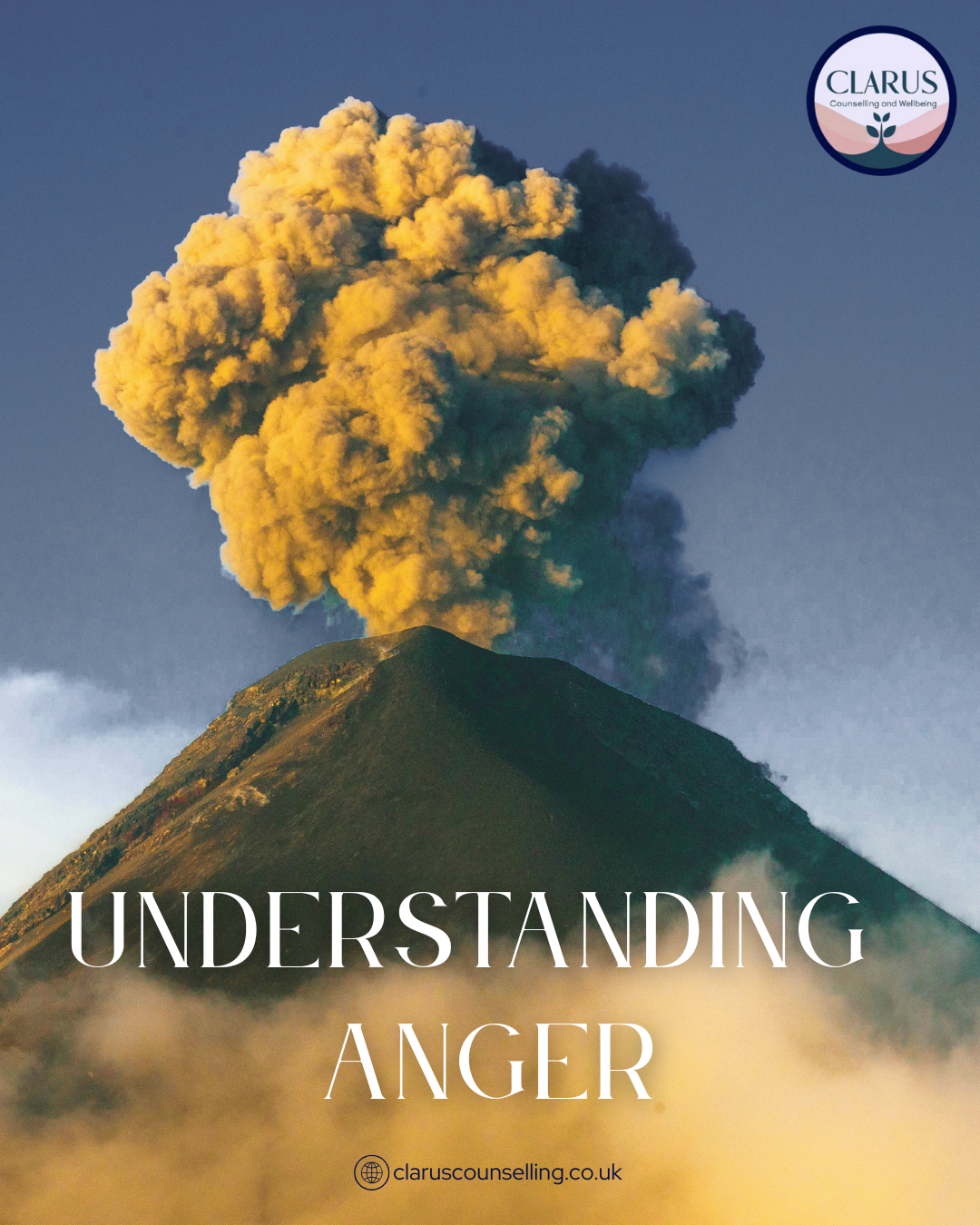
Anger is also a very physical emotion. The body reacts quickly – the heart races, muscles tense, breathing becomes shallow and our ability to think clearly reduces. This is the nervous system’s way of signalling that something feels out of balance. In counselling, bringing attention to these physical sensations can be incredibly grounding. By recognising the early signs of anger in the body, clients begin to slow the process down and gain a greater sense of choice around how they respond.
How Counselling can Support People Struggling With Anger
Through Clarus integrative therapeutic approach, we explore anger through multiple lenses so that clients develop a deep, empowered understanding of themselves. From a CBT perspective, we look at the thoughts, interpretations and expectations that intensify anger. This gives clients practical tools for emotional regulation, improved communication and healthier coping mechanisms. Psychodynamic work brings insight into past experiences, suppressed memories and internalised rules that shape anger today. It connects the present reaction with the original wound, creating space for healing rather than repetition. The humanistic element offers a safe space where clients are met with empathy, warmth and acceptance. In this environment, anger becomes less frightening and more understandable. Clients learn to validate their emotional experiences, reconnect with their needs and build a more compassionate relationship with themselves.
Together, these approaches create a holistic pathway for exploring anger, not as a problem to fix, but as an experience to understand.
Healthy anger is possible. It doesn’t look like shouting or suppression, but rather a calm and clear understanding of what matters to you. It allows you to protect your boundaries, communicate your needs and navigate conflict without losing connection to yourself. When anger is understood instead of feared, it becomes a compass, pointing you toward what needs attention, repair or change.
If you are struggling with anger, whether it feels overwhelming, unpredictable or completely inaccessible, you are not alone. Anger doesn’t make you a bad person; it makes you human. Through counselling, you can learn to approach it with compassion, curiosity and confidence, transforming it from something reactive into something deeply informative.
Claire.